What's New in the 2026 Opioid Settlement Roadmap?
Federal Funding Changes
New guidance on navigating federal funding cuts while protecting settlement dollars.
Updated Priorities
Revised funding priorities and prohibited uses based on the latest evidence and developments.
Real Examples
Documented cases of both exemplary and problematic spending across the country.
Funding Priorities: Where to Invest
Public Health & Harm Reduction
- Syringe services programs
- Drug checking technology
- Low dose/low cost naloxone distribution
- Medication for opioid use disorder (MOUD)
- Overdose prevention centers
- Wound care and infectious disease treatment
Repairing Harms
- Free civil legal services
- Criminal record expungement support
- Second chance employment programs
- Family reunification services
- Child custody assistance
Housing & Supportive Services
- Housing First programs
- Low-barrier housing with support services
- Compassionate outreach services
- Rental assistance and eviction prevention
- Family housing options
Prohibited Uses: What NOT to Fund
Criminalization/Police/Jails
- Police equipment and overtime
- Surveillance systems and drones
- Jail renovations or expansions
- K9 units and narcotics analyzers
- Body cameras and tasers
Ineffective "Treatment"
- Abstinence-only programs
- Involuntary commitment initiatives
- Drug courts
- Unproven treatment methodologies
Wasteful Spending
- Ineffective prevention programs (D.A.R.E.)
- Drug disposal kits
- High-cost or high-dose naloxone
- Dumping this money into the general fund
- Family separation initiatives
Real-World Examples
✓ Good Spending Examples
New Jersey - $118.7M for Harm Reduction
Allocated over 5.5 years for harm reduction centers including brick-and-mortar sites, mobile outreach, and integration into existing healthcare settings.
Menominee Indian Tribe of Wisconsin
The Tribe is using settlement dollars (along with matching funds from Vital Strategies) to establish a syringe service program, expand access to treatment for pregnant women with substance use disorders, and offer harm reduction training and education to the broader community.
Colorado’s Attorney General allocated $3 million to the state's Naloxone Bulk Purchase Fund.
The state allows entities to order 4 types of low cost/low dose naloxone - Narcan 4mg nasal spray, RiVive 3mg nasal spray, naloxone 2mL injection, and naloxone 0.4mg/mL single dose vial.
✗ Problematic Spending Examples
Henrico County, VA - $270,350 on Child Separation
The VA Opioid Abatement Authority approved a cooperative partnership new award between Henrico County (fiscal agent) and Colonial Heights, Richmond, Hanover, Chesterfield to spend $270,350 to hire two registered nurses to serve as liaisons between the hospitals, community OBGYNs, Dept of Social Services (DSS), and community service boards (CSBs) in order to increase referrals of mothers and babies born with neonatal abstinence syndrome (NAS) to DSS. The intention of this program may be good, but NAS alone should not trigger an automatic referral to family regulation agencies.
West Virginia - $3.6M on Law Enforcement
Counties spent 52.7% of their funds on law enforcement including gym equipment, guns, body cameras, tasers, and police cruisers.
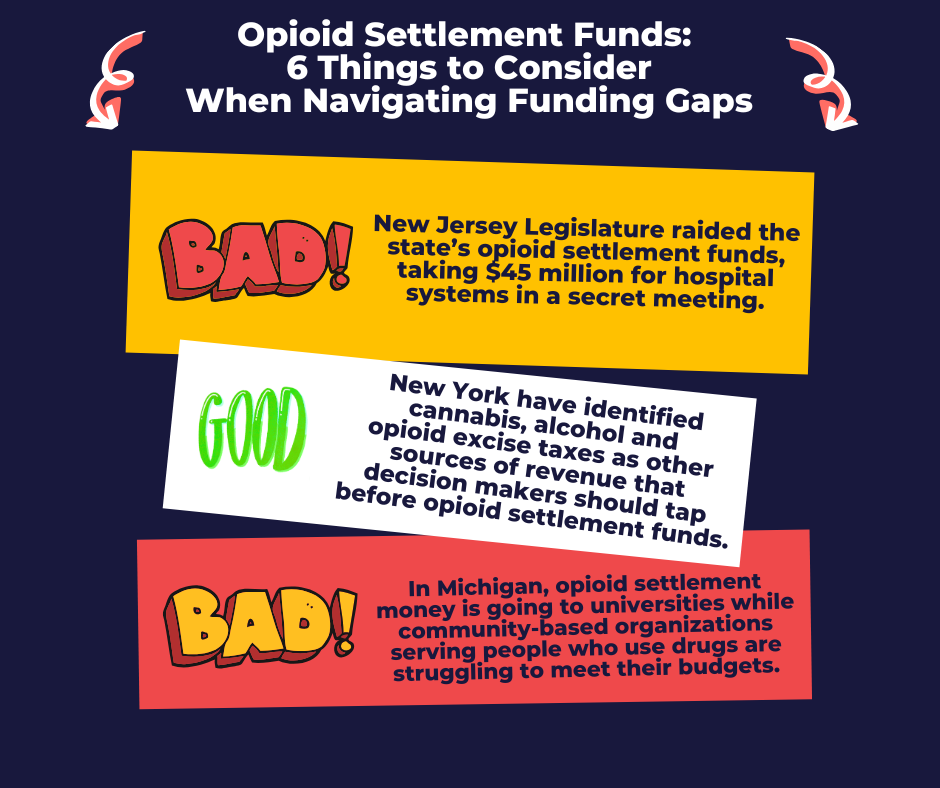
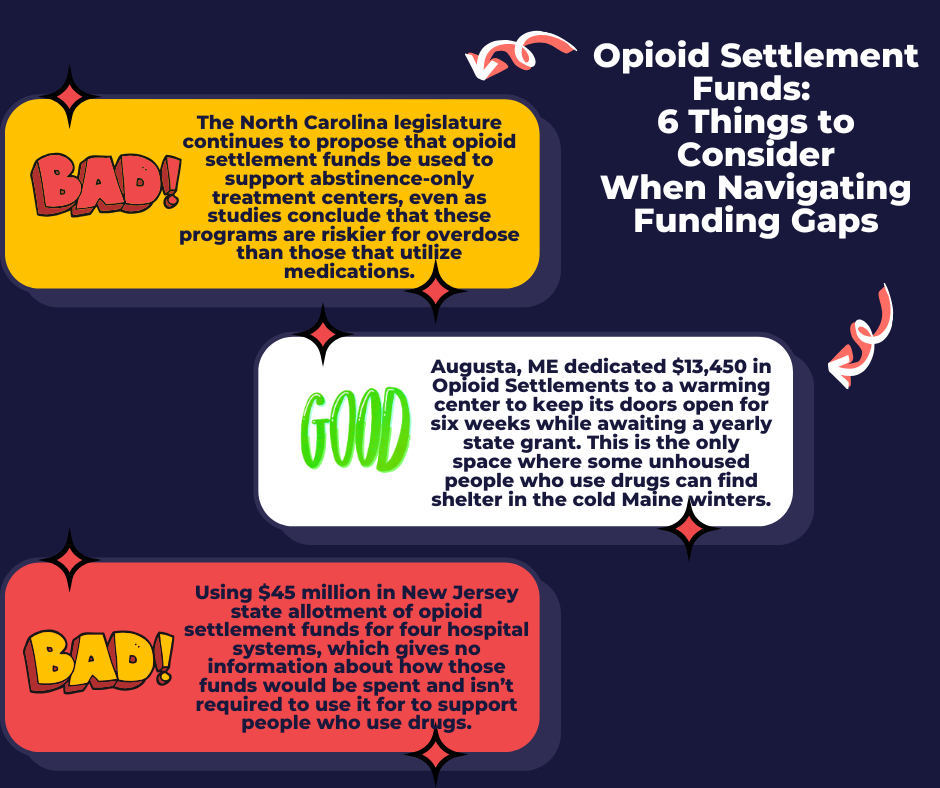
New Jersey - $45M Diverted to Hospitals
The New Jersey State Legislature quietly introduced and passed a budget proposal to divert $45 million in opioid settlement funds to four large hospitals. The bill language says funds are "for the purpose of providing necessary care and treatment for victims of opioid-related health issues" and notes that spending must be in line with opioid settlement spending rules, but does not specify how funds will be spent or if there will be any oversight.
Governance & Accountability
Transparency Requirements
Governments must:
- Require timely reporting from all jurisdictions distributing funds
- Build public dashboards with downloadable data
- Hold regular, accessible public hearings
- Provide portals for reporting waste, fraud, and abuse
- Enforce consequences including claw-backs for misallocated funds
Include Directly Impacted People
People directly affected by the overdose crisis must have a central role in funding decisions:
- Establish advisory councils with majority directly impacted members
- Ensure diverse representation including active users, formerly incarcerated, unhoused, youth, and marginalized communities
- Facilitate regular, compensated, low-barrier engagement opportunities
- Provide community control of defined funding portions
Support Grassroots Organizations
Make RFP processes more equitable:
- Create accessible applications with simplified language
- Provide hands-on support and technical assistance
- Adjust timelines and allow collaborative models
- Design RFPs specifically for community-based organizations
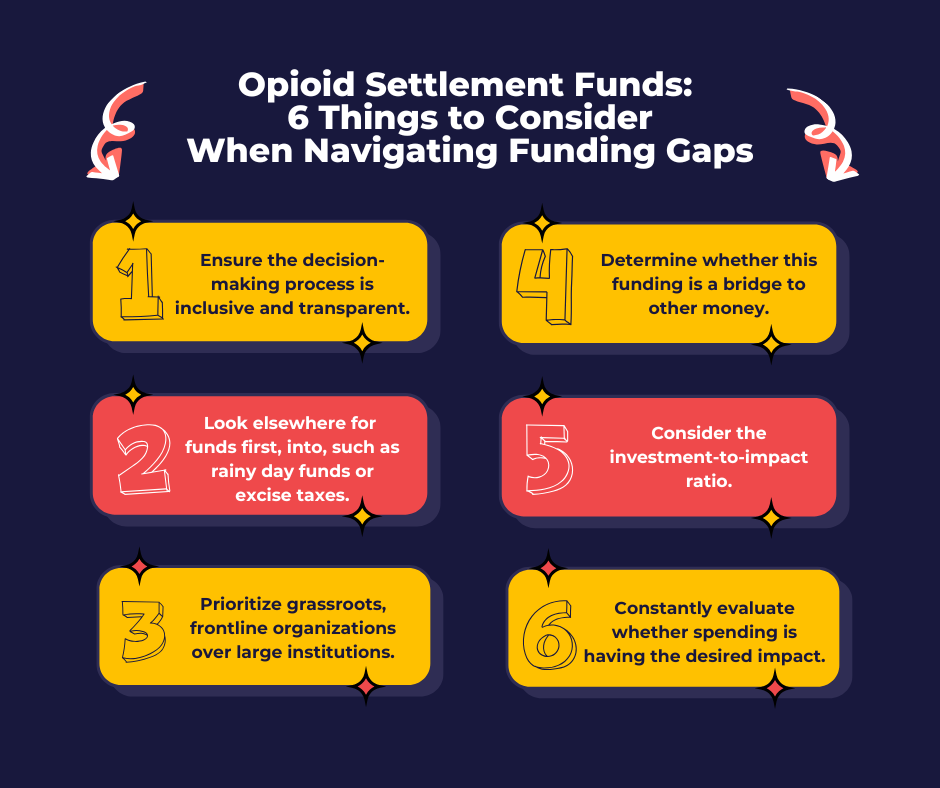
Key Guidelines to Ethically Use Opioid Settlement Funds During A Time of Uncertain Budgets
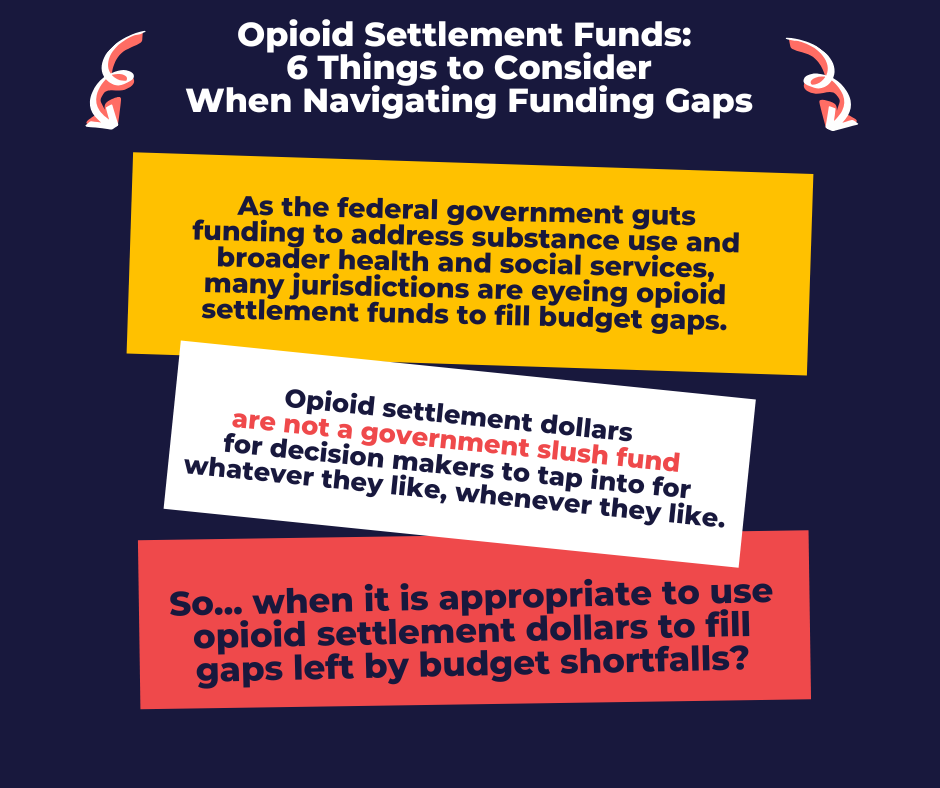
Settlement funds should add to, not replace, existing public spending. When considering using settlement funds to fill budget gaps:
- Be transparent and inclusive in decision-making
- Look elsewhere first (grants, rainy-day funds, other tax revenues)
- Prioritize grassroots, frontline organizations over large institutions
- Consider the investment-to-impact ratio
- Determine if funding is a bridge to other money
- Evaluate whether spending is having the desired impact